To ensure dispatch on the same working day, please place your order by 12pm. Thank you.


 World Country Flags
 Checkered
 Striped
 Plain Coloured
 Advertising
 Miscellaneous
 Gay Pride
 Festival Flags
 Religious
 Skull & Gothic
 Celebration
 British Historic
 Military & War
 Specialist Flags
 Patriotic
 Irish County
 Islands
 British Counties/Regions
 European Province
 Australian States
 Canadian
 US Collectors
 US States & City
 British Counties/Regions


 20m bunting
 6m bunting
 3m bunting
 Decorative Bunting


The History of the Eurovision Song Contest 🎤🎵

🎤 A Journey Through Time: The History of the Eurovision Song Contest
Every spring, millions of viewers across Europe—and increasingly the world—tune in for a glittering spectacle of music, fashion, drama, and sometimes outright absurdity. That spectacle is the Eurovision Song Contest, a celebration of unity, culture, and song that has evolved into one of the longest-running and most beloved television events in the world. But where did it all begin, and how has it transformed over the decades?
🌍 Origins in Post-War Europe
The Eurovision Song Contest was born out of a desire to unite a continent still recovering from the devastation of World War II. Inspired by the Sanremo Music Festival in Italy, the European Broadcasting Union (EBU) launched the idea of an international song competition that would be broadcast simultaneously across several countries.
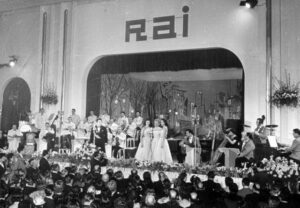
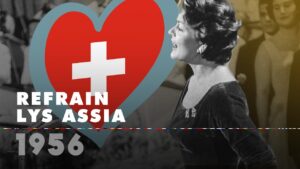
The first contest was held on May 24, 1956, in Lugano, Switzerland. Only seven countries took part: Belgium, France, Germany, Italy, Luxembourg, the Netherlands, and Switzerland. Each country submitted two songs, and the winner—Switzerland’s Lys Assia with “Refrain”—was chosen by a panel of judges behind closed doors.
📺 Growth and Global Reach
The 1960s and 1970s saw Eurovision grow steadily, both in terms of participating countries and audience size. As television technology improved and more countries joined the EBU, the contest became a shared cultural event for millions of European households.
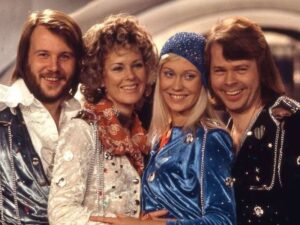
Some of the most iconic Eurovision moments came from this era. Perhaps the most famous is ABBA’s victory for Sweden in 1974 with “Waterloo.” The win launched ABBA into global superstardom and remains one of the contest’s proudest success stories.
The 1980s and 1990s brought further evolution: the stage shows became more extravagant, the voting system more transparent, and the music more diverse. Eurovision began to reflect broader changes in European culture and politics, especially following the fall of the Berlin Wall.
🕊️ A Stage for Unity and Diversity
As the political map of Europe shifted in the 1990s, the contest opened its doors to newly independent nations from the former Soviet Union and Yugoslavia. Countries like Estonia, Latvia, Ukraine, and Serbia would not only join the contest but eventually go on to win it.
Eurovision became a unique platform where countries could showcase their cultures, languages, and identities on a global stage—sometimes with politics subtly (or not-so-subtly) woven into the performances.
🌈 Embracing Change and Controversy
Eurovision has never been without controversy. From political voting patterns to provocative performances, the contest often reflects the social tensions and debates of its time. However, it has also become a champion of diversity and inclusion, particularly in its support of LGBTQ+ communities.
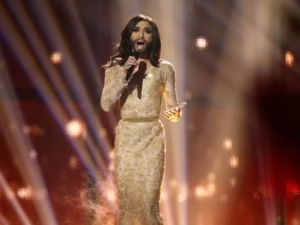
In 1998, Dana International, a transgender singer from Israel, won with “Diva”—a ground breaking moment in Eurovision history. More recently, acts like Conchita Wurst, who won for Austria in 2014, have pushed the boundaries of gender norms and sparked global conversations.

📱 The Digital Age and Beyond
With the rise of the internet and social media, Eurovision’s reach has expanded far beyond Europe. It now has a cult following in places like Australia (which began competing in 2015), the United States, and across Asia.
The contest has embraced streaming platforms, interactive apps, and online voting. In 2021, after a one-year hiatus due to COVID-19, Eurovision returned with renewed energy and a renewed mission to connect people through music.
🏆 More Than Just a Song Contest
Today, Eurovision is about much more than just the music. It’s a celebration of creativity, expression, and the idea that even in a world full of differences, we can still come together on one stage.
From humble beginnings in a Swiss concert hall to a spectacular international event watched by over 180 million people, the Eurovision Song Contest is a testament to the enduring power of music to bring people together.
Fun Fact: Did you know that in 2015 Eurovision was awarded the Guinness World Record for the longest-running annual international TV music competition?