To ensure dispatch on the same working day, please place your order by 12pm. Thank you.


 World Country Flags
 Checkered
 Striped
 Plain Coloured
 Advertising
 Miscellaneous
 Gay Pride
 Festival Flags
 Religious
 Skull & Gothic
 Celebration
 British Historic
 Military & War
 Specialist Flags
 Patriotic
 Irish County
 Islands
 British Counties/Regions
 European Province
 Australian States
 Canadian
 US Collectors
 US States & City
 British Counties/Regions


 20m bunting
 6m bunting
 3m bunting
 Decorative Bunting


Rio Carnival: The History and Origins

The History of Rio Carnival: From Its Origins to a Global Phenomenon
The Rio Carnival is one of the most famous and extravagant celebrations in the world. Held annually in Rio de Janeiro, Brazil, it is a festival of music, dance, and culture that attracts millions of visitors. The roots of this grand event date back centuries, influenced by various cultural traditions and historical events.
The Origins of Rio Carnival
The origins of Rio Carnival can be traced back to the early 18th century when Portuguese settlers introduced the tradition of pre-Lenten celebrations to Brazil. These early festivities, known as “Entrudo,” involved street performances, masquerade balls, and playful water fights. Over time, African rhythms and indigenous traditions merged with European influences, giving rise to a unique Brazilian festival.
The Evolution of Samba and the Rise of Samba Schools
In the late 19th and early 20th centuries, the cultural landscape of Brazil was transformed by the rise of samba, a musical genre deeply rooted in Afro-Brazilian heritage. As samba gained popularity, groups of musicians and dancers formed samba schools (escolas de samba), which played a crucial role in shaping the modern Carnival.
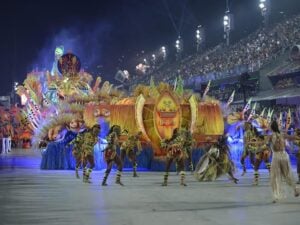
By the 1920s, the first organized samba parades began to take place, featuring elaborately costumed dancers, vibrant music, and choreographed performances. These parades became increasingly competitive, with each samba school striving to outshine the others with their extravagant themes and storytelling.
The Establishment of the Sambadrome
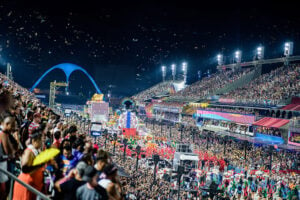
The increasing popularity of the samba parades led to the construction of the Sambadrome Marquês de Sapucaí in 1984. Designed by renowned architect Oscar Niemeyer, the Sambadrome became the official venue for the Rio Carnival’s most spectacular event: the Samba Parade. This dedicated space allowed samba schools to showcase their creativity and artistry on a grand stage, elevating the competition to a whole new level.

Modern-Day Rio Carnival
Today, Rio Carnival is a massive global event, attracting millions of tourists and being broadcasted to audiences worldwide. The festival is celebrated annually in the days leading up to Ash Wednesday, marking the beginning of Lent in the Christian calendar. In 2025, the Rio Carnival is scheduled to take place from February 28th to March 8th.
While the Sambadrome parade remains the festival’s highlight, street parties known as “blocos” continue to capture the spirit of the original celebrations, bringing people together in a shared experience of joy and cultural pride.
The festival has also evolved to embrace contemporary themes, social issues, and technological innovations in costume design and float construction. Despite these modern influences, the essence of Carnival remains rooted in its rich history, blending tradition with an ever-evolving creative expression.

Conclusion
The history of Rio Carnival is a testament to Brazil’s cultural diversity and artistic brilliance. From its humble beginnings as a colonial-era festivity to its status as the world’s most iconic Carnival, the event continues to captivate hearts and minds across the globe. As long as there is music, dance, and a passion for celebration, Rio Carnival will remain a symbol of joy and unity for generations to come.